Posted by: Vishvabandhu Patel
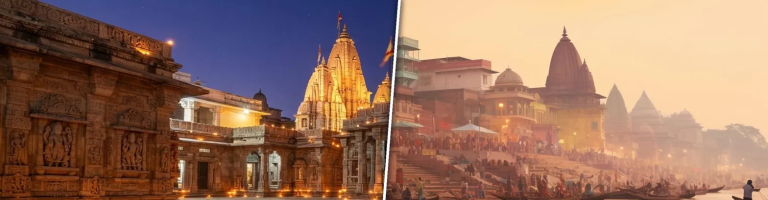
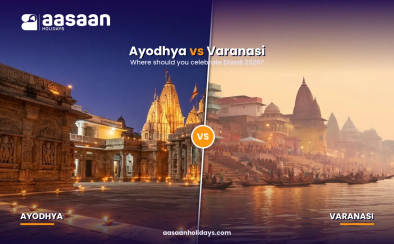
Two holy cities. Two very different kinds of light. In Ayodhya, millions of small clay lamps light up the banks of the Sarayu River to welcome Lord Ram home. In Varanasi, hundreds of thousands of lamps glow along the Ganga ghats, and the whole riverfront looks like it is floating in gold. Both are unforgettable. But they happen on different dates, feel very different, and suit different families. This guide compares the two so you can choose easily.
Choose Ayodhya to be where Diwali itself is celebrated. Its Deepotsav is expected on Nov 5–7, 2026, with the main lamp-lighting on Nov 7, just before Diwali on Sunday, Nov 8.
Choose Varanasi for Dev Diwali on Tuesday, Nov 24, 2026, a calmer, boat-based night about two weeks later. Short on days? Combine both in one trip. Diwali is close, so book trains, flights, and hotels this week.
*Per person, land only, approximate. Travel from Ahmedabad is extra. Always confirm with the operator.
Ayodhya: Diwali Where the Story Began
For many families, Diwali is the day Lord Ram returned to Ayodhya after 14 years. Celebrating it in the city itself carries a special meaning.
The yearly Deepotsav is the main event. The 10th Deepotsav is planned for November 5 to 7, 2026, with the big lamp-lighting expected on November 7. Last year, about 26 lakh lamps were counted, and the 2026 target is around 33 lakh. That target is not final, so the official number will be known only after the event. Schedules can also shift, so confirm the final programme before booking.
Main places to see:
- Ram Mandir: Darshan is free but requires security checks and slot-based queues. Phones, bags, and cameras are not allowed inside, though lockers are available. Plan for 2 to 4 hours on a normal day, and more during Diwali week.
- Hanuman Garhi and Kanak Bhawan: Two of the best-known temples, both close to the main area.
- Sarayu Ghats: The lamp-lighting happens here. Reach the riverfront before sunset, as vehicle access is limited in the evening.
Many people choose Ayodhya tour packages for this week because rooms near the Ram Path area fill up first, and local roads are slow on Nov 6 and 7. A package that includes a hotel and a local cab saves a lot of worry.
Expert Tip: Carry a photo ID. It is needed for security checks and for free aarti passes, which must be booked in advance.
Varanasi: A Different Kind of Glow
Varanasi's big night is not Diwali itself. It is Dev Diwali, held on the full-moon day of Kartik. In 2026, that is Tuesday, November 24. On that evening, the ghats are lined with lamps from Assi Ghat to Rajghat, and the Ganga aarti is at its grandest. The best view is from a boat on the river.
Between the two events, Varanasi is still lovely. Early morning boat rides, the Kashi Vishwanath Temple, Sarnath and the narrow lanes of the old city are all open to visit through the Diwali week, though it will be quieter than on Dev Diwali.
Main things to do:
- Evening Ganga aarti at Dashashwamedh Ghat.
- Sunrise boat ride for calm, soft light and fewer people.
- Kashi Vishwanath Temple darshan, ideally early in the morning.
- Sarnath, a short drive away, where the Buddha gave his first teaching.
Many families start with a Varanasi yatra package that handles the temple visit, the boat ride and the transfers in one plan. It removes the stress of bargaining and queues.
Expert Tip: Book boats ahead for Dev Diwali. Avoid touts on the ghats, as prices can jump sharply that night.
Costs: What to Expect
Prices change a lot during festivals, so treat these as rough guides.
- Ayodhya and Varanasi combined, 3 days / 2 nights: Some listed packages start near ₹9,000 per person, land only, but festival-week prices are usually higher.
- Varanasi alone, 3 days: The Varanasi tour cost for a comfortable stay with hotel, cab, and sightseeing is often about ₹15,000 to ₹20,000 per person. On Dev Diwali night, a boat seat can add around ₹3,000 per person.
- Not included in most packages: Flights or trains, entry fees, tips, personal spending, and meals not mentioned.
Always ask exactly what is included before paying.
Doing Both: A Simple Plan
Ayodhya and Varanasi are about 210 km apart, roughly 4.5 to 5 hours by road. That makes a combined trip easy.
- Day 1: Reach Ayodhya. Visit Hanuman Garhi, then enjoy the Sarayu ghats at sunset.
- Day 2: Ram Mandir darshan in the morning, then drive to Varanasi.
- Day 3: Sunrise boat ride, Kashi Vishwanath, and the evening aarti.
- Day 4: Sarnath, then departure.
This also works well after Diwali, if the family wants to spend the festival at home first.
Travelling From Ahmedabad
Both cities have airports, and both can be reached by train too. Many families fly to Ayodhya or Varanasi, or take a train to Varanasi and a cab onward. Check current flight and train options when booking, as schedules change often. With Diwali close, book transport first, then hotels.
Smart Tips for a Festival Trip
- Book transport first. Trains and flights sell out before hotels.
- Expect slow roads around Nov 6 and 7 in Ayodhya.
- Dress modestly for temples.
- Carry water, snacks, and light layers. Evenings by the river are cooler.
- Keep valuables safe in crowded areas.
- Allow buffer time between temples and transfers.
Conclusion
There is no wrong answer here. Pick Ayodhya for the grand Deepotsav and the Diwali story, or pick Varanasi for the calm river glow of Dev Diwali. Or do both and enjoy two kinds of light in one journey.
Ready to plan? WhatsApp Aasaan Holidays at +91 75672 24488, or send a quick enquiry. The Ahmedabad-based team will plan around your dates and budget.